AIoT GMAC ESP32-S3.
Robotics & IoT BoardA compact 50 mm × 50 mm development board for next-gen robots and IoT projects. Dual-core ESP32-S3, Wi-Fi & Bluetooth, on-board camera and SD storage – all designed for classrooms, labs and serious makers.
About
AIoT GMAC
ESP S3 based Development Board for Robots
SKU
AT000014
Latest Release
23 Dec 2023
Edited
12/04/2024
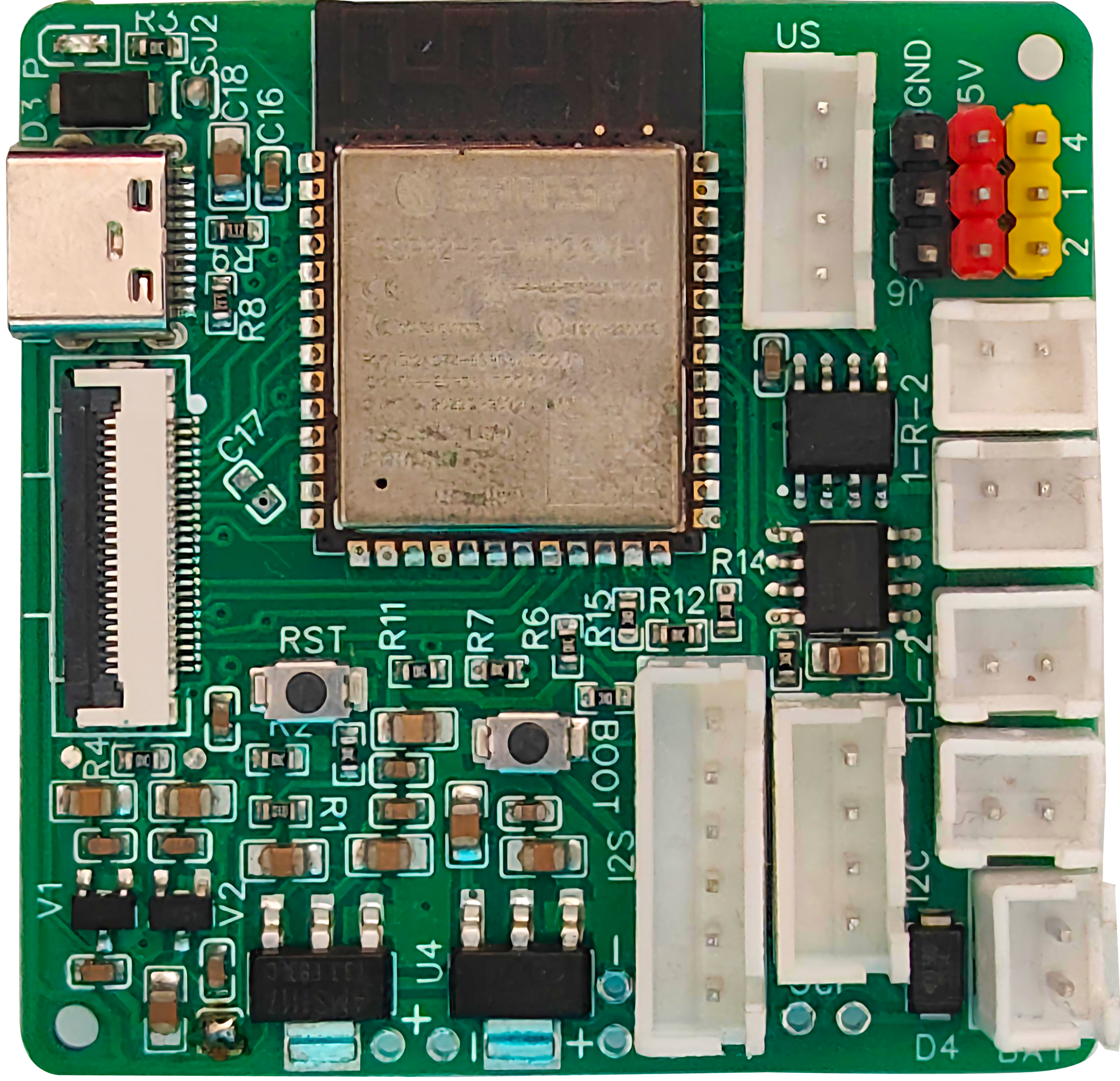
The AIoT GMAC ESP32 S3 N4 R2 SoC development board is a powerful platform designed for advanced robotics and IoT applications. It blends dual-core processing with Wi-Fi (2.4 GHz, IEEE 802.11b/g/n) and Bluetooth (BLE 5 LE and Bluetooth mesh) for reliable connectivity in demanding projects.
Key features include an SD card socket supporting 1-bit mode, a 4-pin female connector for I2C OLED displays, and an integrated OV2640 2MP camera for visual input. Dedicated SR04-US pins simplify ultrasonic sensing, while L1/L2 and R1/R2 motor channels enable precise robot motion control.
Multiple I2C configurations are available: a 4-pin connector (Gnd, Vcc, 21-SDA, 14-SCL) and a 6-pin connector (Gnd, Vcc, 46-LRCK, 45-BLCK, 47-Din & Mic IN, 0-Dout) for audio peripherals. Flexible power options include a 7–9V DC jack, a USB Type-C port for power/programming, and a 2-pin JST battery connector for 7.4V Li-ion packs.
The combination of robust compute, extensive connectivity, and versatile I/O makes GMAC ideal for building sophisticated robotics systems, intelligent automation, and connected prototypes.
Tech Specs
Processor
ESP32-S3-N4 R2 SoC, Dual-core Xtensa® 32-bit LX7, up to 240 MHz
Memory
512 KB internal SRAM with support for external flash and SRAM
Connectivity
Wi-Fi 2.4 GHz (802.11 b/g/n); Bluetooth® 5 LE + Mesh
Security
Hardware AES/SHA/RSA engines with secure boot
Power Management
Ultra-low-power co-processor with deep/light sleep modes
Programmable GPIOs
10 user-controlled GPIO pins
Memory & Storage
Integrated memory plus SD card slot (1-bit mode)
Digital Interfaces
4-pin female connector for OLED display (I2C)
Camera
Built-in OV2640 2MP camera
Sensor Interfaces
SR04-US header (Vcc, Pin 44, Pin 43, GND)
Motor Control Pins
L1 & L2: Pins 39/40, R1 & R2: Pins 41/42
I2C Connectors
4-pin: GND, VCC, SDA21, SCL14; 6-pin: GND, VCC, LRCK46, BLCK45, DIN47 & Mic IN, DOUT0
Other Interfaces
SPI, I2S, UART available via headers
Power Supply
DC jack 7–9V DC @1A, USB Type-C for power/programming
Power Consumption
Active depends on peripherals; deep sleep in µA; light sleep in mW
External Battery
2-pin JST male connector for Li-ion 2-cell 7.4V
USB Interface
USB Type-C for power and programming
Temperature Range
Typically -40°C to +85°C
Relative Humidity
Typically 10% to 90% non-condensing
Codes
GMAC Hands-On Project Library
Run these ready-made experiments on the AITinkr GMAC (ESP32-S3) board. Each project includes wiring notes and a complete sketch so students can focus on learning, not boilerplate.
Snippet
Blinking LED using GMAC Board
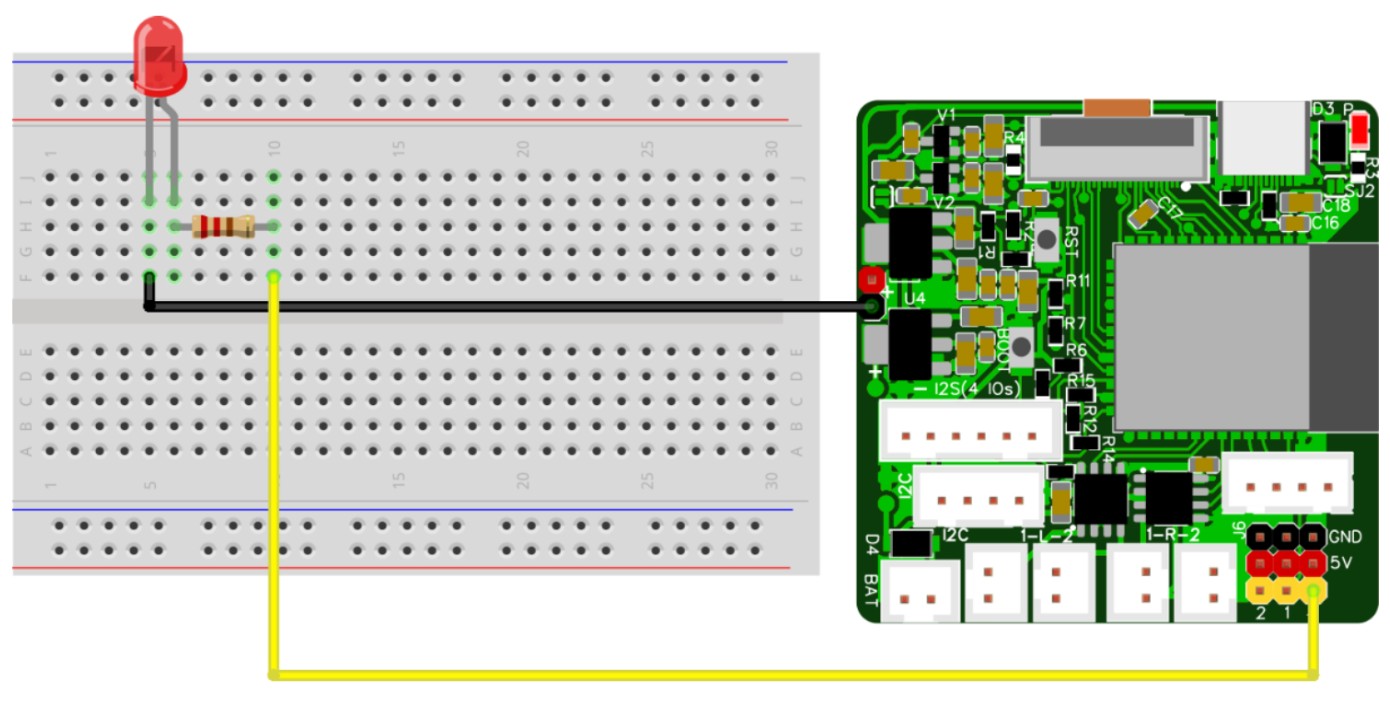
Classic 'Hello World' — make an LED blink ON and OFF every second using GPIO 4 to verify your GMAC board setup and Arduino IDE configuration.
#define LED_PIN 4  // LED connected to GPIO 4

void setup() {
  pinMode(LED_PIN, OUTPUT);  // Configure the pin as OUTPUT
}

void loop() {
  digitalWrite(LED_PIN, HIGH);  // Turn LED ON
  delay(1000);                  // Wait for 1 second
  digitalWrite(LED_PIN, LOW);   // Turn LED OFF
  delay(1000);                  // Wait for 1 second
}- Connect LED anode (longer leg) to GPIO 4 through a 220–330 Ω resistor.
- Connect LED cathode (shorter leg) to GND.
- Perfect first project to confirm board selection (ESP32S3 Dev Module) and COM port.
- Challenge: Change delay(500) for faster blink or delay(2000) for slower.
Contact us
Get in Touch With Us
- Phone number
- 91 99492 96431
- hello@aitinkr.com
Business Hours :
Monday - Saturday: 9:00a.m to 8:00p.m
Sunday: With Appointment Only
Send a Message
Write to us. We would catch up with you as soon as we receive your message